
In many universities in Africa, research shows that many members of the academia deliver lectures as a way sharing knowledge with students. This has been shown to be very defective in helping students grasp difficult concepts.
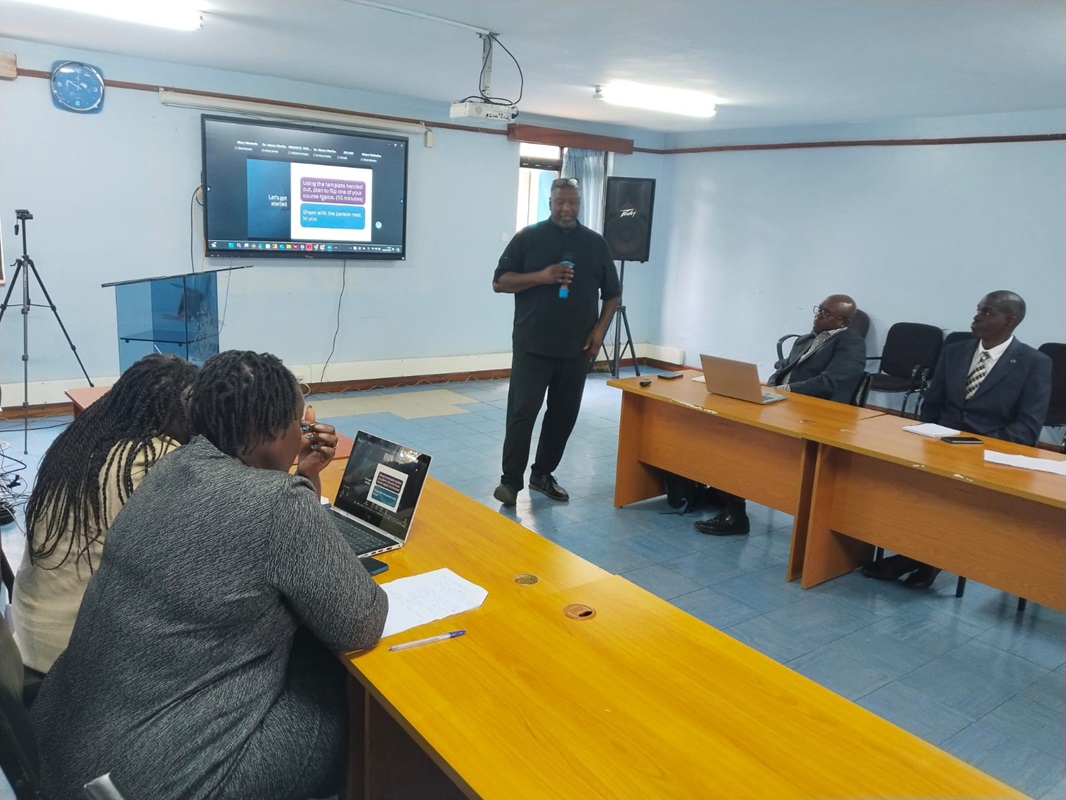
Speaking during the event, Prof. Harvey Miller, from Saint Mary's University, Canada, explained in detail the various methods that could be incorporated into teaching to help students grasp difficult concepts much easily.
He narrated a story from his undergraduate studies in West Indies University, where a visiting professor made statistics so easy to grasp and he has since fallen in love with the subject. He realized that different modes of teaching has a way of helping students understand complex things easily.
‘Everyone can succeed if they find the right strategy,” he said.
According to Prof. Harvey, delivering a lecture helps students understand by 5%, reading by 10%, audio visual by 20%, demonstration by 30%, discussion groups by 50%, and students teaching other students helps them understand concepts by 90%. “Students in traditional lecture are 1.5 x likely to fail than active learning,” he warned.
In teaching graduate students, Prof. Harvey, observed that the role of the educator should change from transmitter of knowledge to facilitator and coach. “Graduate students have acquired so much knowledge in the industry and hence the teacher should be more of a facilitator and coach and not transmitter of knowledge, allow yourself to be taught as well,” he said.
Faculty Members are highly paid resource. They should reinforce learning. “You need to be more of facilitator, design class learning activities, see knowledge as two way process, exchange of knowledge between student and professor. Facilitate exchange of information, knowledge, “he observed.
Some of the strategies he shared include: The staple strategy, where students think of ideas, discuss the ideas with fellow students and share the insights in class. Other strategies discussed include visual and collaborative methods which include conceptual mapping, sticky note clustering, gallery walk. Other strategies worth exploring include: structured discussion dynamics which incorporates the fishbowl, the smitten, opinion lineup and finally the jigsaw method.
He challenged lectures to try and test multiple intelligences of students, from reading, communication, doing , visual and auditory.
Prof. Stephen Odock, Chairman, Department of Project Planning and Management Sciences supported the challenge of re-inventing the teaching methods. This will go along way in making learning interesting.

