
Speaking during the event, Denis Karani, FISA Chairman, explained the purpose of the event was to bring together finance professionals from diverse fields to be able to guide students, the event theme being: smart finance, helping students by providing value.
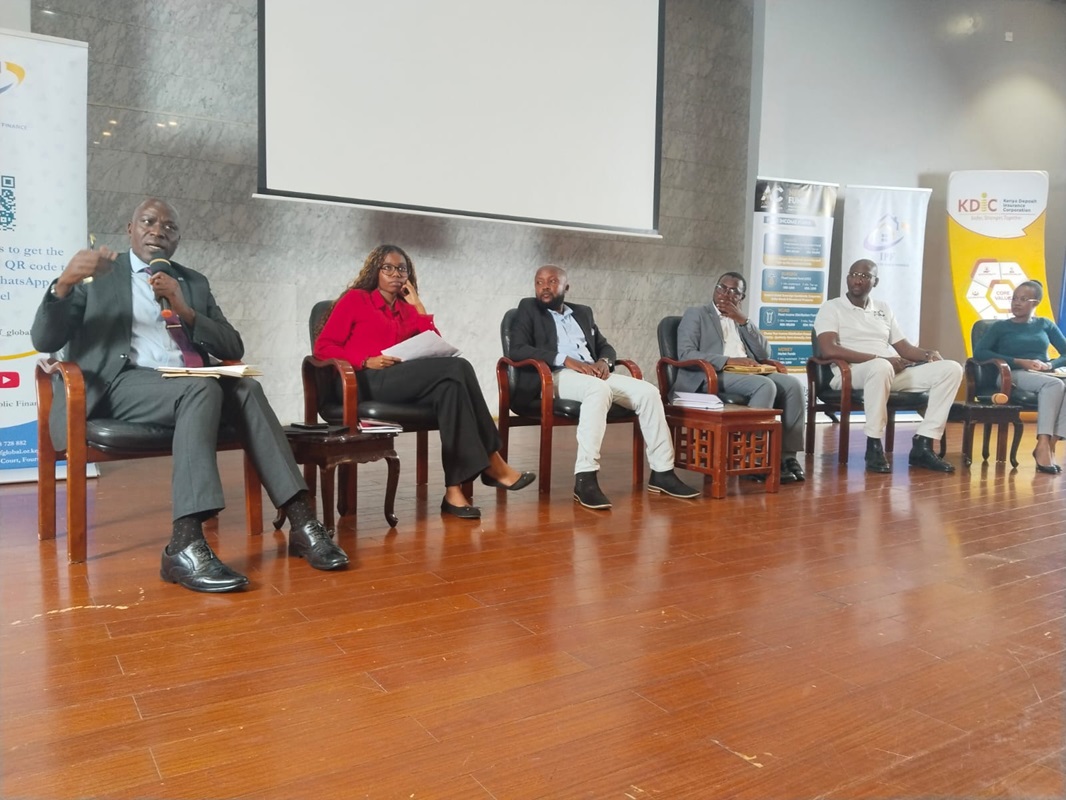
The event was sponsored by IPF, KDIC, Absa Bank, Oak Fund among others.
The Chief Guest, Hellen Chepkwonyi, CEO, Kenya Deposit Insurance Corporation, (KDIC), noted that they are working hard to protect depositors in Banks. They guarantee safety of client deposits. She said that 99% of Bank Depositors have less than 500,000 Shillings in their accounts and when a bank collapses, they auction their properties and ensure that all clients are paid. As regards to advancing technology and more cryptocurrency, she revealed that funds in crypto is not protected by the government.
One of the panelists, Mr. Paul Manga, who started as an engineering student before transitioning to finance and having worked with Banks in his 20+ years career, explained that many people using mobile money applications tied to the registered Banks are protection while those using mobile money not tied to the Bank or Financial institutions are not protected.
In the age of artificial intelligence, in the world of smart finance, is our money safe? This was discussed in details by the panelists present; key among them being Mulwa Kasanja from Institute of Public Finance, (IPF), Daniel Murakaru, Lawyer, Eric Sila, Alumni an Alumni of School of Business, Lower Kabete and now an Finance Professional working with Britam Insurance. It was revealed that A. I Bill is in the pipeline, and it will give direction of usage, consumption, development of AI in the country and misuse of AI and also penalties in the miuse of AI.
For tech enthusiasts and cryptocurrency enthusiasts, it was revealed that the Government has officially recognized Cryptos. It has also approved Crypto Asset Law.
How are Banks using AI to make smart decisions
It as revealed that Finance Institutions like Banks are using A.I in product development, in knowing what customers need and in knowing which products to bring to the market in their near future. Students were also told that other technologies like recommender engines, machine learning and big data are used in the banking sector for purposes of fraud monitoring. This is mainly done by monitoring customer transactions behavior and any misbehavior is flagged promptly. Banks also monitor clients’ activities like travelling, shopping, holidays among others.
Jobs being replaced by AI. Is it fear mongering?
Students were told to embrace technology and more so Artificial Intelligence. AI is not a competitor, but a tool to help you make work much easier, the future of work is uncertain. “We don’t know if the careers we hold will exist in the next 10 Years,” said one of the panelists.
Apart from adding AI skills to their resumes, students were also told to add selling skills, negotiation skills, communication skills. “CEO who wants to close a seven figure income wont do that on a portal, but on one on one selling. Tech can’t replace that. Tech can’t replace selling skills, “ said one of the panelists.
On Public Finance and Expenditure of Public Money.
Student were encouraged to peruse through the county budgets and country budgets to ascertain the accuracy and expenditure of the national resources. “ We have county websites where these documents are posted. Please go through them and raise questions”, said one of the panelists. There are programs for campus students asking them to demand for publication of budget documents and scrutiny in the use of public resources.
How can banks leverage green finance, to enhance climate resilience?
Banks are the forefront in leveraging green finance. This is done through partnerships with both the public sector and private sector. For example : looking at water and sanitization, Banks are keen on seeking partners and financing business cases with subsidized credit rates to help them build tanks, sewer lines. Subsidized credit is also given to those in agriculture and more so in the planting of planting trees to enhance climate resilience.

